There are roughly 200 different wave energy prototypes in existence today. Each one represents a different bet on how to harness the power of the sea. Against that backdrop, what can one EU project really teach the sector?
Quite a lot, if you ask John Ringwood, Professor at Maynooth University in Ireland and one of the leading minds in wave energy control research. We caught up with John halfway through the INFINITY project to ask what stands out, what the sector is getting wrong, and what still needs to be solved before wave energy can truly take its place alongside wind and solar.
How does INFINITY stand out compared to other wave energy projects you have been part of?
– I think the mix of partners is somewhat unique. Based around a commercial WEC prototype, with all the attendant issues to do with making a wave energy device work effectively in real ocean conditions, but includes partners covering all the other technical, economic, environmental, and social aspects as well. I think we are all learning from each other, as well as advancing the status of the project.
INFINITY brings together expertise in control systems, environmental impact, circularity and social acceptance, alongside the core engineering. The idea is that a wave energy device cannot succeed on technical merit alone.
What has been the most significant insight halfway through?
– Some very interesting discussion about the testing stages, including simulation in Sweden, Ireland and Italy, to hardware-in-the-loop testing in Italy, to ocean testing in Sweden. Also, considerations on how the device should be operated in low-to-moderate sea states, high-energy sea states, and extreme sea states. This is important in making the maximum economic benefit from the system, while extending the lifetime of components.
In other words: how you test matters as much as what you test. And the sequence matters too, building gradually from simulation to the real ocean.
If you had to distil the project’s findings into three key lessons for the wave energy sector, what would they be?
– I would point to three lessons:
- Use realistic mathematical models for simulation and control development.
- Test under a variety of conditions, from simulation and hardware-in-the-loop to ocean testing, with progressively more energetic waves.
- Ensure that environmental and social aspects are fully considered, including environmental impact, circularity of design, and societal acceptance.
Which of these lessons do you think the sector has been slowest to embrace?
– Possibly the third, since often the focus is on the purely technical, or techno-economic.
It is a pattern familiar across many emerging energy technologies. The social licence to operate, and the environmental footprint of the technology itself, often come later. In wave energy, where devices will operate in coastal waters and require manufacturing, maintenance and eventual decommissioning, that perspective is central.
What still needs to be solved before wave energy can truly compete with other renewable energy sources?
– There are two main issues. One is the relatively high Levelised Cost of Energy for wave energy, compared to other renewable and traditional energy sources. Ultimately wave energy will need to compete with more established wind and solar. The second issue is maintaining wave energy device operation for long periods in the hostile sea environment, which hasn’t been proven yet. This includes survival under extreme sea conditions, as well as minimising maintenance requirements.
A more resilient wave energy sector will not be built on engineering alone. It will depend on how well technologies are tested, how they perform over time, and how they are designed to fit into both marine environments and future energy systems.
In that sense, INFINITY’s contribution is not only the development of one device, but the way the project brings different perspectives together around the same challenge. For a sector still searching for its most viable path forward, that may be just as important as the waves themselves.
Is there anything about you that might explain why wave energy caught your interest in the first place?
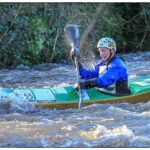
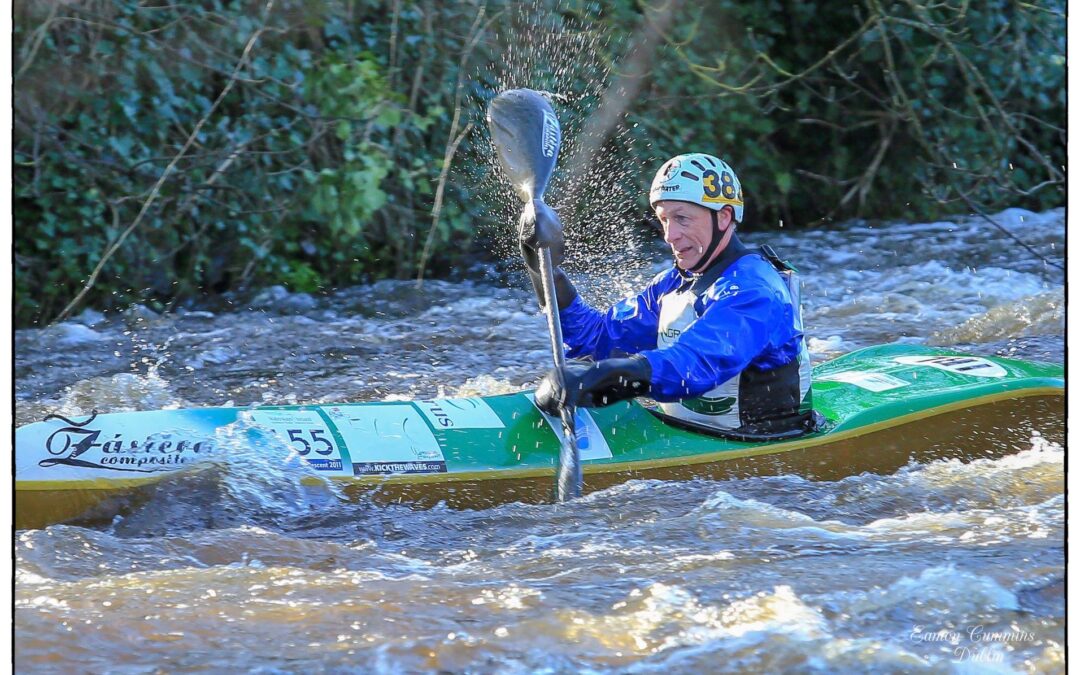
– Hard to keep me out of the water! I kayak, sail a Hobie Pacific catamaran and race yachts. The photo illustrating this article was taken during one of my kayaking national ranking wild water races. So perhaps it is not so surprising that the ocean ended up being both my playground and my research field.