
Environmental performance in wave energy systems is largely determined in the early design phase. Choices related to materials, system configuration and performance set the foundation for resource use and emissions. According to Johanna Berlin, researcher at NILU, integrating environmental considerations alongside cost and technical requirements from the outset is key to reducing impact.
Long before a technology is tested or deployed, its environmental performance has already begun to take shape. Early design choices around materials, structure and function determine much of what follows. For Johanna Berlin, researcher at NILU, the timing of when environmental aspects enter the process varies:
– It depends on the environmental knowledge and interest of the design team. The best would be to incorporate environmental issues from the very beginning, at the latest the same time as costs and economy considerations, she says.
In practice, this means that sustainability needs to be considered alongside technical and economic reasoning from the outset.
What kinds of design decisions matter most for environmental performance?
– The choice of materials and the volume of materials. Considering making a design choice using materials with a lower environmental impact or making a design choice using less materials will make a great environmental improvement.
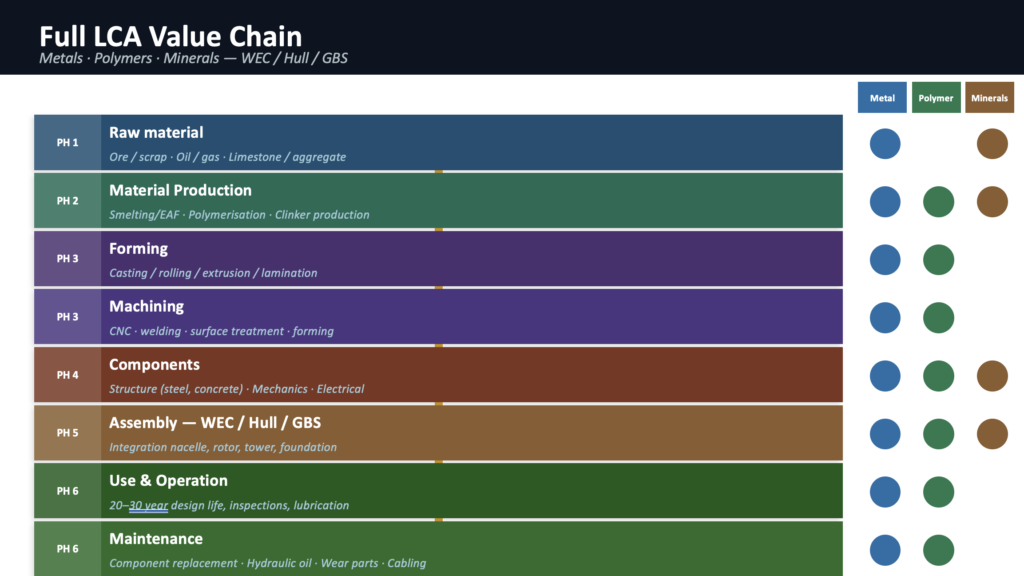
The environmental footprint is therefore largely defined early. Reducing volumes or selecting lower-impact materials can significantly improve outcomes.
Can you give an example of a design choice that clearly improves sustainability?
– Using recycled materials and reused components. Such measures may seem straightforward, but they depend on being considered early in the design process.
Is it always a trade-off between performance, cost and environmental impact?
– There are many situations where performance, cost and environmental impact go hand in hand. Performance affects both cost and environmental impact from a life cycle perspective. Higher performance and energy output for wave energy reduce the relative material and production impacts. Designing products with equal performance but less material benefits both cost and the environment. Using environmentally preferable materials is also advantageous when their costs are lower than alternatives.
But what happens when priorities do not align?
– If either performance cost or environmental impact becomes less favorable than before, decisions must be made at a broader level than just the product, a broader system level. Consider whether the company, municipality, or even nation has objectives regarding costs or environmental matters, such as climate neutrality. Also, think about the reputation the company aims to maintain.
How can life cycle thinking be integrated into design work?
– Incorporating life cycle thinking during the initial design phase can be achieved by conducting a screening quantitative evaluation of different design options. This approach helps identify which materials are more environmentally desirable.
One final question, what makes this work difficult in practice?
– The inventory of data, she concludes.
Access to reliable data remains a bottleneck, making it harder to compare options and quantify improvements. Taken together, these perspectives point to a shift in how environmental performance is understood. It is not only the result of how a system operates, but of how it is conceived. Design decisions are environmental decisions, made early and often before the full consequences are visible.