
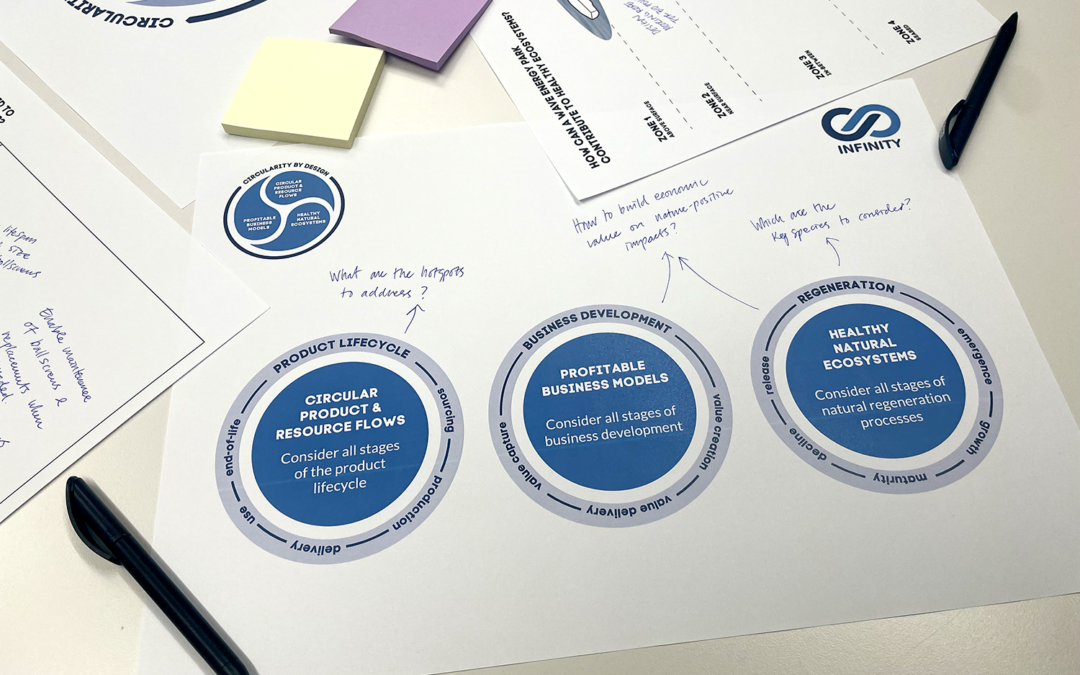
Developing wave energy technology is not only about capturing power from the ocean. It is also about how systems are designed from the outset and what impacts they have over time. This is a central perspective in the INFINITY project.
Circularity-by-design is used as a starting point. In simple terms, it means considering the full lifecycle already in the design phase, including how much material is used, how long systems last, how they can be maintained, and what happens when they are eventually taken out of use.
– Designing for circularity is about reducing resource use, using products and materials for longer and (re)circulating them when needed, and regenerating nature. All with the ambition of creating lasting ecological, economic, and social value, says Anneli Selvefors, researcher at RISE.
Within the project, this work is guided by three objectives: creating circular product and resource flows, healthy ecosystems, and viable business models. Together, they shape how the project approaches the development of wave energy systems, from individual units to entire parks.
Early choices shape what is possible
At an early stage, the focus is on identifying where design choices can make a difference.
– It can involve choosing materials with lower impact, designing for longer product lifespans, and making maintenance, repair, and upgrades easier, says Steven Sarasini, researcher at RISE.
For wave energy systems, location also plays a key role. Location affects how much energy can be generated alongside transport needs for installation and maintenance. The project also explores opportunities to create net-positive environmental impacts by designing wave energy parks in ways that create new habitats and contribute to increased biodiversity.
Analysis as a basis for decisions
To better understand which design choices matter most, lifecycle assessments and scenario analyses are used throughout the project.
– We use these analyses to understand the environmental impacts of a reference scenario and to design and assess alternative scenarios. This helps us identify which design parameters are most important to focus on, says Anneli Selvefors.
Rather than focusing on a single component, the aim is to understand wave energy as a system. This also means managing trade-offs, since performance, cost, and durability do not always align.
– We have discussed trade-offs between performance and component lifetime, and between costs for alternative designs and for repairs, says Steven Sarasini.
A reference scenario has been established jointly by the project partners and is now used as a basis for further analysis and future design iterations.
Designing for maintenance and reuse
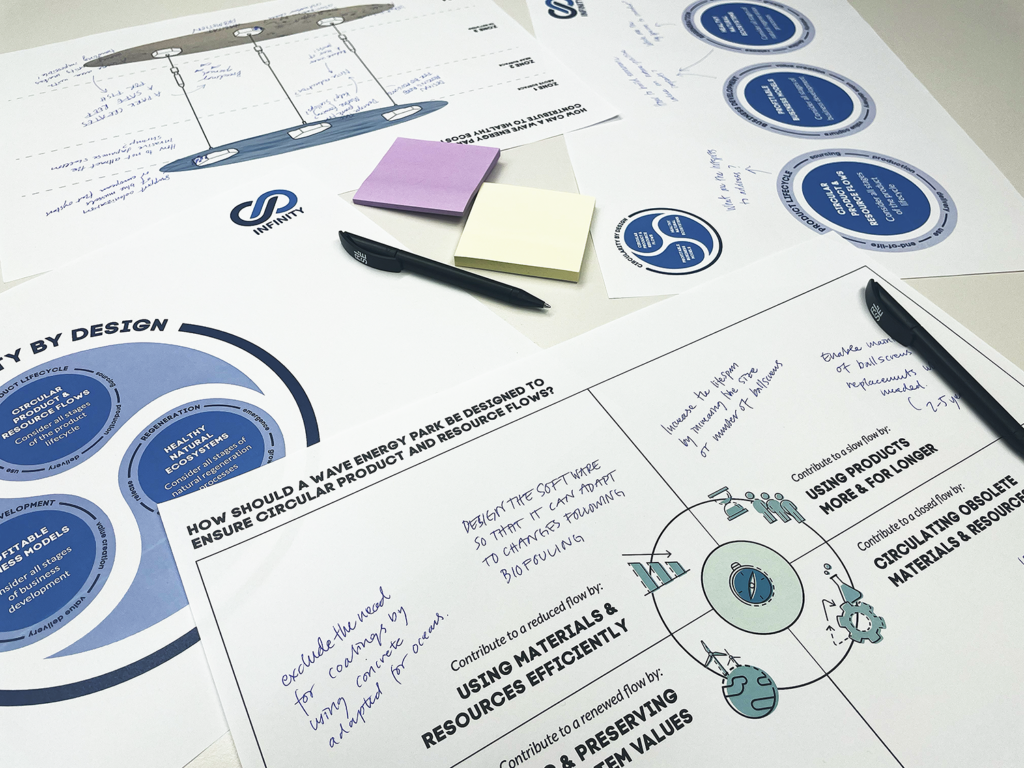
Another key aspect is making systems easier to maintain, repair, and reuse over time. By identifying which components are most exposed to wear and tear, these can be designed with more robust materials and made easier to access. Components can also be designed as modules, making them simpler to replace or upgrade. In practice, this means that a wave energy unit can be disconnected, brought ashore for maintenance, and then reused to replace another unit in need of repair.
– By designing systems in this way, we can reduce wear and tear while also enabling repair and reuse, says Steven Sarasini.
While this work is carried out within wave energy, the approach is relevant for other energy technologies, particularly those that are complex and expected to operate over long periods.
– It is about aligning different perspectives early on and ensuring that the right competences are involved. The solutions need to be feasible, desirable, and sustainable from industrial, societial and environmental perspectives, concludes Anneli Selvefors.