Developing new clean energy technologies is one thing. Making sure they can be used in practice is another. At a CETPartnership workshop in Madrid, INFINITY presented its work on wave energy and explored the challenges of bringing new energy solutions into wider use.
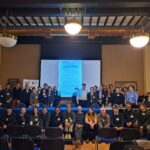
Researchers and industry representatives from across Europe gathered in Madrid on 6–8 October to exchange experiences and discuss challenges shared by different clean energy technologies. INFINITY was represented by project coordinator Ola Widlund from RISE and Carrie-Anne Barry from the Centre for Ocean Energy Research at Maynooth University.
INFINITY was one of the projects invited to present its work within Transition Initiative 2 (TRI2), which focuses on zero-emission power technologies. The workshop also brought together projects from TRI3, covering renewable fuels, energy storage and the use of CO₂, creating opportunities to learn from research in other fields.
Scaling up is a major challenge
For Ola, the discussions highlighted the challenges of moving from technical solutions to applications on a much larger scale.
– One thing that stands out is the need for technical solutions to be scaled up to the enormous volumes required. This also creates enormous challenges in areas such as logistics, which in itself is nothing new, says Ola Widlund.
He also points to the difficulties of developing business models that work and creating financial incentives for companies to enter markets that do not yet exist. These are relevant questions for INFINITY as the project develops technology to make wave energy systems more reliable and efficient.
Involving communities early
Carrie-Anne was particularly interested in how people’s views and needs can affect the success of new energy technologies.
– One of my main takeaways was the importance of looking beyond technological innovation and considering the wider societal factors that influence the successful deployment of clean energy technologies, says Carrie-Anne Barry.
During interactive sessions, participants discussed how to involve communities that may be affected by new energy projects. Carrie-Anne believes these conversations should begin long before a new technology is ready to be used.
– I found the discussions around stakeholder engagement particularly interesting, especially the need to involve communities early in the development of renewable energy technologies rather than treating societal acceptance as something to address at the point of deployment, says Carrie-Anne.
Ola also highlights how people’s perceptions can influence whether new technologies are accepted.
– There are many common challenges, not least for applications like these, where social acceptance and people’s subjective perceptions of a technology’s benefits and risks can have a greater impact than the actual objective conditions, says Ola.

What this means for INFINITY
INFINITY is not only developing wave energy technology but also looking at its wider impacts, including environmental considerations, circularity and how people may respond to wave energy.
– The event reinforced the importance of integrating societal considerations into technology development from an early stage. This aligns with our work in INFINITY, where we are exploring societal acceptance alongside life cycle assessment and circularity by design and technical innovation, says Carrie-Anne.
For both Ola and Carrie-Anne, meeting researchers from other energy sectors was valuable. The discussions showed how projects working on different technologies face similar challenges, from scaling up and creating viable business models to gaining public acceptance. These shared experiences offer useful perspectives as INFINITY continues developing wave energy technology.