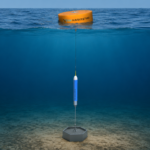
As the INFINITY project prepares to test its power take-off prototype, researchers are focusing on a challenge that will become particularly important at sea: understanding when critical components need maintenance and how potential problems can be detected early.
Once wave energy equipment is installed offshore, inspections and repairs can be both difficult and expensive. For the INFINITY project, this makes the current development phase an important opportunity to prepare for future operating conditions.
– The closer we get to manufacturing and testing the prototype, the fewer opportunities we have to make design changes. We therefore need to decide early what we want to test and how the results can help us understand future service and maintenance needs, says David Carlstedt, Researcher at RISE Research Institutes of Sweden.
Turning theory into practical measurements
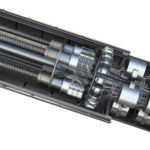
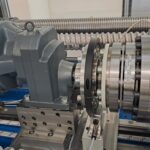
One of David Carlstedt’s tasks is to develop a proposed condition monitoring system for the power take-off (PTO), which converts wave movement into energy that can be used to generate electricity.A particular focus is the ball screws, which transform the vertical movement into rotation. These components are repeatedly exposed to mechanical loads, making their condition and expected lifetime important factors in the system’s reliability.
Until now, researchers have mainly used theoretical models to study forces, rotational speeds and component behaviour. The challenge is to translate this knowledge into measurements that can be made on the actual prototype.
– We have discussed which signals could help us estimate the lifetime and condition of important components. Previously, these were mainly theoretical values. Now we need to decide which sensors and measurement methods to use, how often to collect data and how to process the results, explains David Carlstedt.
What the prototype tests will reveal
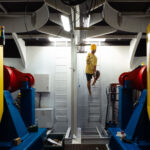
The upcoming tests will examine the PTO under simulated wave loads, including how its control algorithms perform and how repeated loading affects individual components.By comparing measurements with theoretical predictions, researchers hope to determine how accurately their models describe real component behaviour.
– We want to identify which signals are most relevant to measure during operation. This will help us develop methods for assessing component condition and provide a better basis for future decisions about service and maintenance intervals, says David Carlstedt.
Electrical signals from the generator and motor are among the possible sources of information. These could eventually help operators detect changes in the system’s behaviour before they lead to more serious problems.
Balancing reliability and maintenance
The physical design also involves trade-offs. For example, using several ball screws could distribute mechanical loads more evenly and reduce wear on individual units. At the same time, additional components mean more parts to inspect and potentially replace.Accessibility is another consideration. Components exposed to high loads should ideally be inspected or replaced without extensive dismantling of surrounding equipment.These questions are being considered alongside the continued PTO development at Ocean Harvesting Technologies, control system development by project partners and preparations for the prototype test rig.
The findings from the test campaign will help the team understand which design and monitoring approaches can support reliable operation, before the technology is deployed in the more demanding offshore environment.